
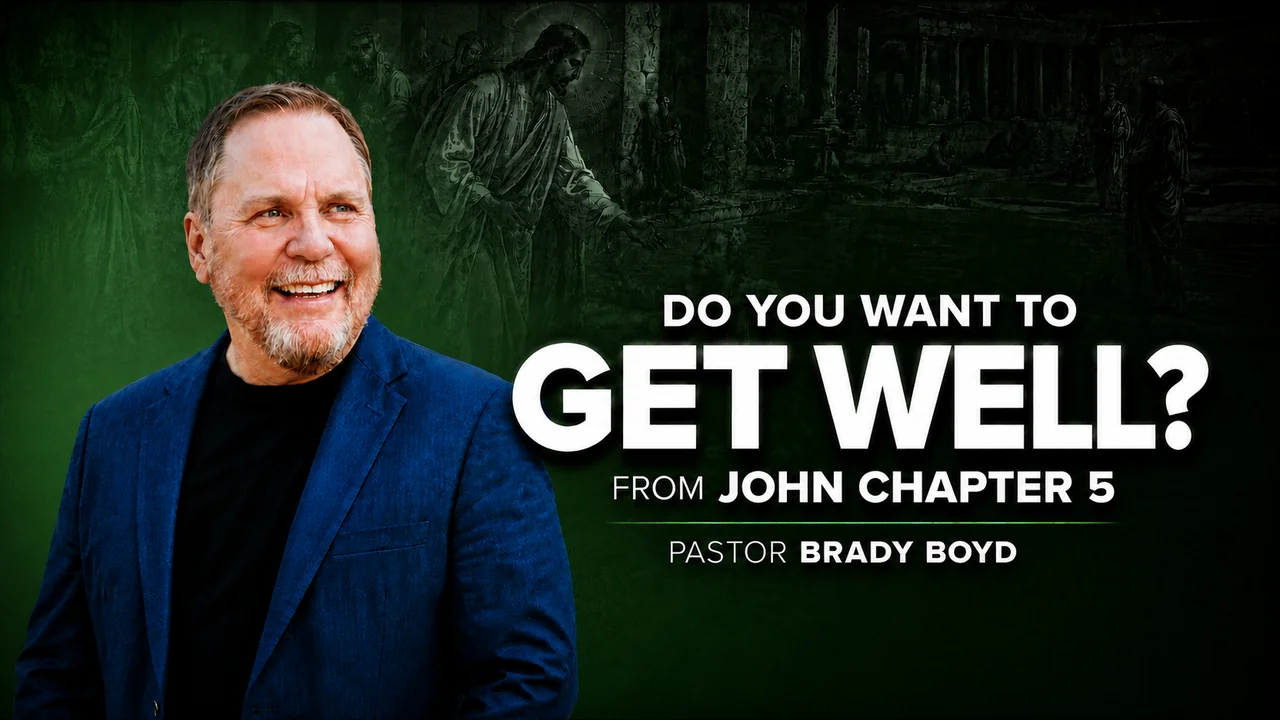
Do You Want to Get Well?
Chapters
Key Takeaways
- •Jesus asks a question that sounds obvious because the answer is not obvious. Staying sick can feel safer than the work of getting well.
- •Hopeless people are usually friendless first. Friends, help, and hope arrive in that order.
- •Get up is salvation language. It is the offer of a new life, not a demand for more effort.
- •Pick up your mat means carry your testimony. You do not owe anyone the gory details, but every scar is a story.
- •Walk means leave the small space. Grief, hurt, and trauma shrink a life down to one room.
A man had been lying beside a pool in Jerusalem for thirty-eight years when Jesus walked up and asked him a question. It sounds like a question that answers itself. Do you want to get well? In John 5:1-9, Pastor Brady Boyd makes the case that it does not answer itself at all, and that the honest answer is harder than it looks.
A Question That Should Have Been Easy
The pool of Bethesda sat near the sheep gate in Jerusalem, surrounded by five covered colonnades. Brady noted that this is a real location, uncovered again in recent years and under renovation when he last visited Israel, not a symbolic setting. Local legend held that an angel would occasionally come and stir up the water, and that the first sick person into the troubled waters would be healed. So the sick gathered there and waited. The blind, the lame, the paralyzed, and one man who had been an invalid for thirty-eight years.
"One who was there had been an invalid for 38 years. When Jesus saw him lying there and learned that he had been in this condition for a long time, he asked him, 'Do you want to get well?'"
Think about what thirty-eight years costs. The family events missed. The sunrises and sunsets, the trips, the ordinary conversations. Brady said this man's life has a huge gap in it, and then he described him three ways: friendless, helpless, and hopeless. Those three arrive in that order. "Every person you meet that is hopeless is probably friendless and feels helpless," he said. "Every person who has suicidal thoughts most often they start out as friendless. They feel helpless and they end up hopeless." Every person in the room needs friends, needs help, and needs hope. Without those three, you end up like the man by the pool.
And Jesus saw him. That is the detail worth sitting with. This was a man everyone else had learned to walk past. Brady was careful here: you cannot personally rescue every person you see, and that is not the demand. "I'm saying, do you see them?" The question is whether you still see the image of God in a broken soul, or whether you have gotten hardened enough to look through people entirely.
Why the Answer Is Not Automatically Yes
The man does not say yes. He explains. "Sir, I have no one to help me into the pool when the water is stirred. While I'm trying to get in, someone else goes down ahead of me." Those are reasons, and they are real reasons, but they are still not a yes. Brady framed it as a prayer point for the people in your life you have fed, funded, and helped into jobs, and who keep disappointing you.
"Sometimes the pain of trying to get well is more severe than just accepting a new normal and staying sick."
Therapists sometimes call this prison thinking. Brady reached for the picture everyone knows: the older man in The Shawshank Redemption who gets out and cannot function in the modern world, so he tries to get himself sent back. We do the same with our own conditions. Sickness and fatigue become familiar, and familiar starts to feel like safe. Then an opportunity to take a step toward healing shows up looking impossible.
He pointed to someone in the room who had come through a long and difficult recovery, and made the point plainly: it started with a decision. Am I going to stay sick, or am I going to take the first step toward getting well?
There is a second thing buried in the man's answer. "I have no one to help me." That is not an excuse, that is a diagnosis. The people at that pool were not a community, they were competitors, racing each other into the water. Brady was direct about how badly that lands in Colorado, where he said the state motto is leave me alone and self-reliance gets treated as a virtue rather than a limit. The first step for every addict is admitting you need help. Most people stuck in cycles of abuse and poverty could escape if someone would help them. And you are closer to that than you think. He put a number on it: you are two relationships away from being in that spot yourself. Remove your spouse, your kids, and your extended family, add a couple of hard turns, and where exactly would you go?
Get Up
Jesus gives three commands, not one, and they are three different things with three different meanings. The first is "Get up." Brady pointed out that in the original language this is salvation language. It is not a rebuke aimed at a man who has been on a mat for thirty-eight years. It is the offer of a complete change of life.
"If anyone is in Christ, the new creation has come, the old has gone, and the new is here."
Something shifted in the man before his body did. This was the moment he had faith, the moment he decided to take a chance. Brady put the theological weight of it bluntly: sin has already been paid for, so what keeps a person out is not sin but unbelief, not believing what Jesus has already done. And he made a promise about what follows belief. Your muscles will react differently than they have ever reacted. Your thinking, your attitude, your behavior will change. Not by your own strength, not because of your goodness, but because of the grace of the Lord.
Pick Up Your Mat
The second command is stranger. Why would Jesus tell a healed man to carry the filthy mat he had been lying on beside that water for decades? Because the mat is the evidence. It is the before, carried by the after. Show people the mat you used to lay on, and show them the new man you are now.
"You don't have to tell people all the atrocious things of your past, but you need to tell people about your mat."
Brady has three scars on his chest from three open heart surgeries, and smaller ones from ordinary teenage stupidity. Every scar on your body is a story. Scars say there was an injury here, it hurt, it could have killed me, and I was saved. Some of you are embarrassed about your testimony, and that is why you never share it. Hold up the mat instead. This is what I used to be. This is where I once was. It is not where I am now.
Walk
The third command is the one about the future. The man had been in the same place every day, and his world had gotten very small. Brady compared it to visiting the elderly and the homebound, people who once traveled the world or ran companies or served in the military, whose lives narrowed down to a room at a nursing facility and a dining room down the hall.
Pain does that. Pain keeps us in a prison. Grief, hurt, and trauma all shrink the space a person is willing to occupy. So Jesus says walk. Go explore. Get out of that small space. Quit thinking so small. Stop organizing your entire life around the thing that is wrong with you.
Brady closed with a charge and two questions worth answering honestly this week. Where do I need healing? And who do I need to ask for help? The first is between you and God. The second requires a phone call. Watch the full message above, and then make the call.
From the Field: Nigeria
Get up. Pick up your mat. Walk. That is not only a personal instruction. It is also what a congregation does after its building comes down.
On the same morning this message was preached, photos arrived from Kaduna State, Nigeria, where a congregation The Village Church supports is rebuilding the church building they lost. The walls are up. See the rebuild.
Get Updates
Subscribe to receive new messages and ministry updates.
Related Articles
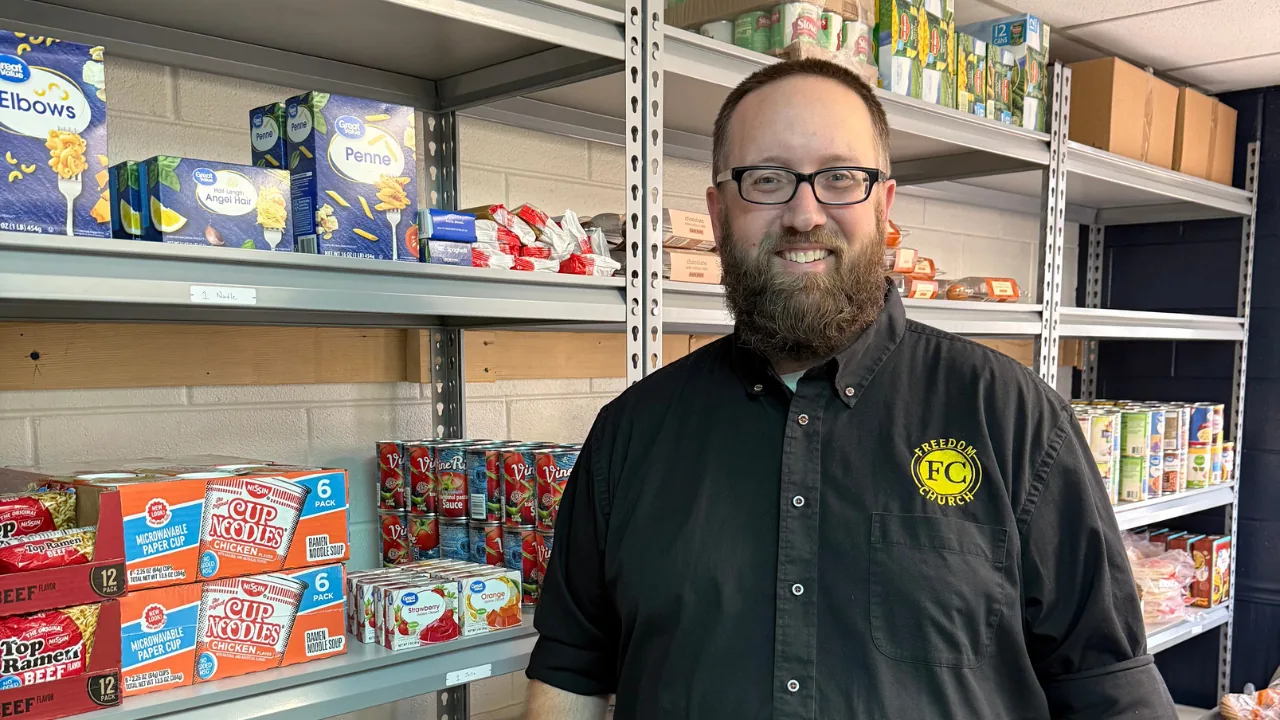
Hidden Heroes: Cimarron Hills Food Pantry
In Cimarron Hills, Pastor Scott Maxon and Colorado Freedom Church make sure no neighbor goes hungry - one Sunday, one family at a time.
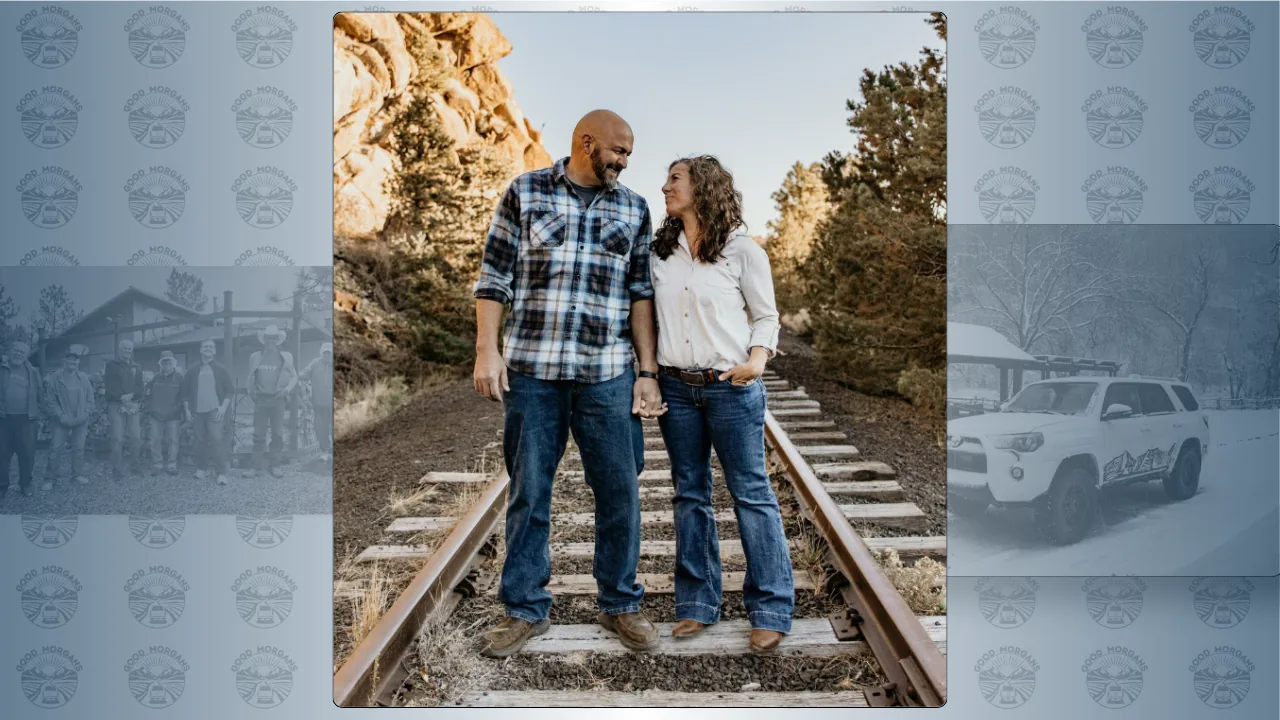
Hidden Heroes: Good Morgans
In the Arkansas River Valley, Good Morgans keeps people moving - so a broken-down car never means a lost job or a missed appointment.