
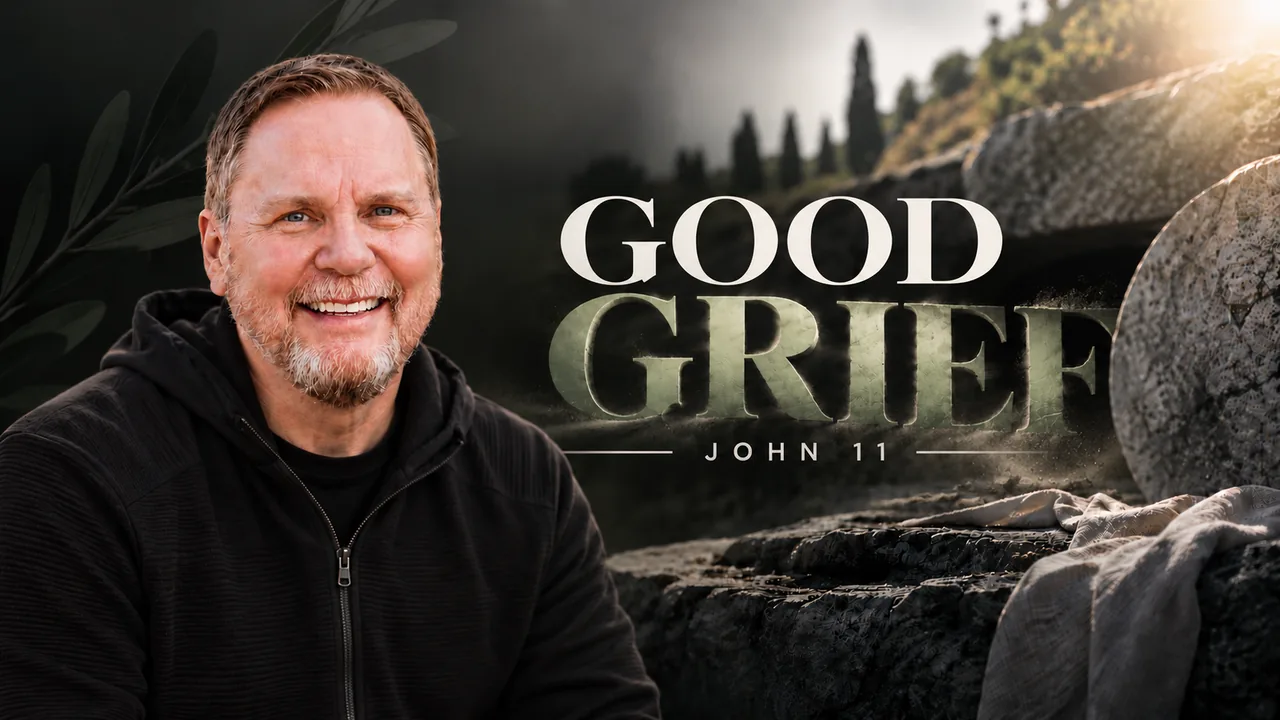
Good Grief
Chapters
Key Takeaways
- •Jesus wept, knowing Lazarus was about to walk out of the tomb. He did not skip the process of grieving. He entered it with the people He loved.
- •God is not offended by honest grief. Two-thirds of the Psalms are laments, and God says, tell me more.
- •Grieving properly does two things: it confronts the pain, and it makes you available again to comfort others.
- •Psalm 137 shows the path through: admit there is a new reality, take time to mourn, and remember Zion.
Pastor Brady opened John 11 with a confession: he could not remember the last time he heard a message on grieving. "We're paying a price for our inability to really grieve properly in America," he said. So this message was about good grief. For the Charlie Brown fans, yes, that good grief. There is a proper, biblical way to grieve the losses we have had in our lives.
He started with a loss from his own week, one he admitted might sound a little minor. He and Pam went down to Baton Rouge. Their daughter Callie, 25, had her dream job. She loved it, she loved her church, she loved the school she worked for, and she was on the sidelines of ball games, living her best life. Then her whole department was wiped out by budget cuts. To make matters worse, the great new job she landed was at the University of Florida, the bitter rival of the LSU she grew up loving. So Pastor Brady is moving her, and there were tears. There was grief about leaving a place she loved for a place that is unfamiliar.
These are the things he was talking about. We all live with losses: the loss of a father, a child, a pet, a job. How do you process them so you become a better human being, more Christlike? That is what John 11 shows us.
Where was God?
In verse 32, Mary reached the place where Jesus was, fell at His feet, and said, "Lord, if you had been here, my brother would not have died." Lazarus and Mary and Jesus were something like a friend group. They had a long history of friendship.
Pastor Brady stopped right there. The first thing the enemy will do when you have a loss in your life is try to get you to blame God for it. In 30 years as a pastor, sitting with people through extreme losses, children killed in car accidents, cancer, awful things, he has heard the same first question about 90 percent of the time: Where was God?
"That's the wrong question because God was there." We live in a very broken, sinful, ugly world that God is going to redeem and restore. The kingdom of heaven is breaking in even now, all around us, if we are looking for it.
And Pastor Brady loves that Jesus was not defensive about Mary's words. Verse 33: when Jesus saw her weeping. He saw you. He saw your tears. He cared about Callie's tears this week. He is not a God in heaven so detached from the human race that your tears do not matter. Your tears matter. Your sadness matters to Him.
Jesus wept
When Jesus saw her weeping, and the Jews who had come along with her also weeping, He was deeply moved in spirit and troubled. "Where have you laid him?" He asked. "Come and see, Lord," they replied. Then verse 35, the scripture most of us memorized first, the shortest one in the Bible.
Jesus wept.
Let that soak into your heart. Jesus was about to go to the tomb and raise Lazarus from the dead. He could have told everyone to settle down and cut out the crying. He did not do that. He knew full well that in a few minutes the grave clothes were going to come off and Lazarus was going to walk out of there, and still He did not skip over the important process of grieving. He entered into their grieving with them. When you were grieving, Jesus was with you, participating in the grief alongside you.
Pastor Brady paused there to pray for the room and for people watching on YouTube around the world. He said this was not a sad sermon. It was meant to bring people back to life, and he prayed for resurrection.
We have forgotten how to grieve
Most people are not good at expressing grief. It is not something built into American culture. Pastor Brady told the story of a friend who owns a funeral home in a small East Texas town, the buckle of the Bible Belt, with a church every half mile and 98 percent of the people saying they love Jesus. His friend has 35 bags of human remains in his funeral home that families will not claim. Grandma goes to the nursing home, grandma dies, the family pays 700 dollars to cremate her body, and they never come to get her.
Those were lives lived 80 and 90 years, with nobody there to celebrate them. There should be funerals and memorial services for those people.
We have forgotten how to honor life and we have forgotten how to weep.
A man recently told him he does not like going to funerals. Pastor Brady answered, "They're not meant for your entertainment." He does not like going to them either. But going to grieve and mourn, and being there to remember a life that was well lived, is an important part of your human development and of the Christian experience.
The Psalms of lament
Two-thirds of the Psalms are laments. Read them: real people expressing real emotion about real things that really happened. Some are imprecatory psalms. I'm mad at you, God. I don't like these people. Strike them down. Send pillars of fire. Send bulldozers over their houses. Pastor Brady's verdict: "It's awful."
And God is not mad about any of that. He is sitting there saying, come on, tell me more. Tell me how you feel. He is not upset with you. What He wants you to do at some point, though, is leave it with Him.
You can ignore your pain, but that is bad. To the tough guys in the room: "You ignore your pain, you will explode somewhere else." You have to talk about your emotions. If it hurts too much to talk about, that is exactly why you have to talk about it. Find someone you can explode on so you do not explode on the people you really love: a good counselor, a good therapist, a good pastor. Or buy Pastor Brady a lunch and explode on him, though it will be an expensive lunch. Some protein.
God is not offended at your human emotions, or He would have wiped out two-thirds of the Psalms. Pastor Brady asked the room to write this one down:
The Hebrew writers knew that the path of praise often went through the valley of mourning.
Your worship will radically change once you get to the other side. Something happens when you walk through the valley of the shadow of death. Songs you ignored and worship moments you did not care about suddenly mean something. It changes the way you love other people.
Grief confronts the pain
So what happens when we grieve and mourn properly? Two things. Number one, our pain is confronted. At some point you have to say it: that was not good. Pastor Brady was clear that this was not a philosophical sermon. He and Pam have had to do this work. He said he would not be preaching today if he had not done it. He did that work for 12 months, or he would never have been able to preach again. When you have experienced something painful and you do not confront it, "you're no good no more."
Proverbs 14 says even in laughter the heart may ache, and joy may end in grief. In other words, you cannot fake it very long. Stop putting on a facade where everything is great and everything is awesome. "No, it sucks. It's okay." He apologized for saying the word in church, but that was the point: stop being so polite and say out loud what happened.
Grief is protest. When you grieve, you are saying, that should not have happened to me. That was wrong. That was a violation. That was unjust. Some of us need to protest a little more. We do not want what happened to be true, but it is true. So before you go to bed tonight, say out loud what happened to you. Something will happen in your heart.
Grief is something we must enter voluntarily. Pastor Brady said he was not forcing anyone into it, only inviting. But there is a cost to staying out.
There's pain from avoiding pain.
You are going to have to look it in the eye at some point. You are going to have to kill your Goliath, because he will keep taunting you until you put a rock in his forehead. You can be taunted for the rest of your life and hide in a cave, or you can walk out there with your slingshot full of God's power, do the work, and confront the spiritual bully. Ecclesiastes 7 says sorrow is better than laughter, because a sad face is good for the heart, and the heart of the wise is in the house of mourning. If you are sorrowful, be sorrowful.
You become available again
The second thing that happens when you mourn properly is beautiful: you become available again. "That's why I'm here today," Pastor Brady said. In the first six or seven months after everything happened with him and Pam, some very wise people told him not to rush back into something. Others were clamoring for him to start a church tomorrow. He knew that was the worst thing he could do. He waited and waited until the Lord gave him a thumbs up.
Had he not done the hard work, he would not have been available. He would have been angry, aggravated, disconnected, and sad. He is not sad now, but he was. Then the Lord said, Brady, you are now available to do that again, and 35 of his closest friends confirmed it: you have done the work, you are ready.
Isaiah 61 says the Spirit of the sovereign Lord anointed Him to preach good news to the poor, to bind up the brokenhearted, to proclaim freedom for the captives and release from darkness for the prisoners, to proclaim the year of the Lord's favor and the day of vengeance of our God, to comfort all who mourn. Pastor Brady stopped there.
You can't comfort all who mourn if you have not mourned.
You have to do the work before you are available to help anybody else. Looking out at strong people who have gone through hard things, and at a few parents in the room, he said God is about to use them. Their story is about to become a powerful witness to a watching world. That grief, that mourning, that sadness is not going to be wasted, not one single second of it. The Lord will use them to comfort those who mourn and to bestow a crown of beauty instead of ashes, the oil of gladness instead of mourning, and a garment of praise instead of a spirit of despair. They will be called oaks of righteousness, a planting of the Lord for the display of His splendor.
Walk into the storm
The American bison is one of the few animals that, when a blizzard comes, turns and walks into the storm. It walks toward the storm, because the storm will not last as long if you walk into it. If you run from the storm, it follows you. Walk into it, and it shortens everything. That is a picture of mourning. Turn and walk into the storm, and you will get to the other side quicker than if you run from it.
By the rivers of Babylon
So how do we grieve? Pastor Brady turned to Psalm 137, a psalm most people have never read and assume does not apply to them. It applies to all of us. It was written after the Babylonian exile. The Jewish people had been conquered and displaced, refugees in chains, marched across the desert into 70 years in Babylon. Psalm 137 was written to remember that time.
He wrote this down after the shooting at New Life 19 years ago. He did not know how to grieve properly. He had never been trained or taught. An old pastor friend told him, "Brady, I want you to read Psalm 137." The Lord spoke.
By the rivers of Babylon, we sat and wept when we remembered Zion.
That is the path of grieving, and Pastor Brady walked through it in three steps.
1. Admit there is a new reality
Life is not the same. "I'm in a Marriott preaching on a Sunday morning," he said. It is not what he has been doing for the last 30 years, and it was not on his bingo card five years ago. He is glad to be there. Sometimes you just have to admit it is different. It is not bad. It is just different.
They were not sitting by the Jordan anymore. They were by a strange river in Babylon, a place they had never been. When you are grieving, admit it: it is never going to feel the same. That chair is always going to be empty. Your heart will always have scar tissue from what happened. Hoping things will go back to the way they were traps you in a circular, confusing pattern your whole life. Even when Israel returned 70 years later, the place was a mess. Nehemiah had to rebuild it. They did not come back to the same homes, gardens, or jobs. That is the first critical step of grieving properly.
2. Take time to mourn
Do not get in a hurry. It may take years. It may take weeks. Grief is different for every single human being, because of what happened, how it happened, and when it happened. Do not put an artificial timeline on your grieving. Let the Lord do this.
Notice that the psalm says, we sat and wept. Staying busy is not an option here. They sat, they took their time, they rested, they talked about it, and they wept while they rested. Staying busy keeps us occupied, but it does not allow for mourning. Some of us need to clear our schedules. Have a chill Sunday. Stop filling every available hour with doom scrolling. Put the screen away, go outside, get some sun, breathe in some mountain air, have some time with Jesus. Do not drink cheap coffee. Do something nice for yourself.
3. Remember Zion
They remembered the past. So talk about it. Pastor Brady had just done this with a family in the room, asking them to tell him great stories, the times their loved one made them laugh, the stories they will still be telling and laughing about five years from now. That is healthy.
His own dad died in 2005. He recently saw a photo of his father at 59, his own age now, and he looks just like him, with the same personality. He thinks about the great times: hunting trips, fishing trips, getting lost in the woods together, the food and the barbecue his dad would make, the laughter. "He was so joyful. He was a good man."
Remember the great times, and reflect on the lessons you have learned. What did you learn about the Lord, about yourself, about your marriage? Pastor Brady and Pam have been married 37 years, and he said their marriage was not harmed by what they went through. It was strengthened. They looked each other in the eye right away and said, we are on the same team, we are in this together, and we are not walking away from each other. They found out who their friends were. The valley teaches lessons you cannot learn on the mountaintop.
He closed by asking the room to embrace grief, because a victory is waiting on the other side. Keep walking. "I'm proof positive that the victory is nearer than you think."
The Lord's Table
Before communion, Pastor Brady prayed for the Holy Spirit to bring healing and invited everyone to turn their palms toward the Lord and receive it like a gift from someone who loves you. No alcohol, no pill, no drug can bring that healing. The Holy Spirit is the great healer.
There is not one thing you have experienced that Jesus did not experience on the cross. His friends abandoned Him. His body was beaten within an inch of His life. He bled and died, alone except for a handful of women, His mother, and maybe John, with soldiers mocking Him. And He went there voluntarily. They did not take His life. He gave it. For the first hundred years of the church, the table of the Lord was the reason believers gathered. So hold up the bread over whatever is broken in your life, and declare that healing is on its way.
Get Updates
Subscribe to receive new messages and ministry updates.
Related Articles

Hidden Heroes: Cimarron Hills Food Pantry
In Cimarron Hills, Pastor Scott Maxon and Colorado Freedom Church make sure no neighbor goes hungry - one Sunday, one family at a time.
Hidden Heroes: Good Morgans
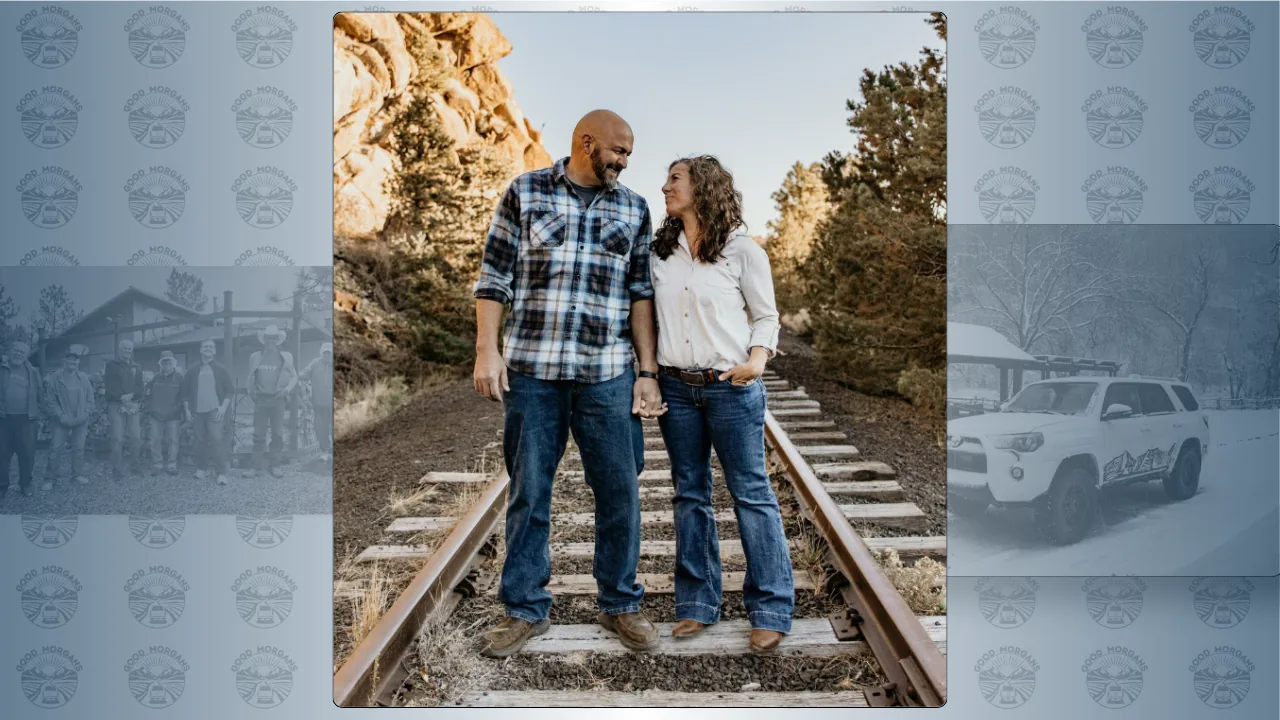
In the Arkansas River Valley, Good Morgans keeps people moving - so a broken-down car never means a lost job or a missed appointment.